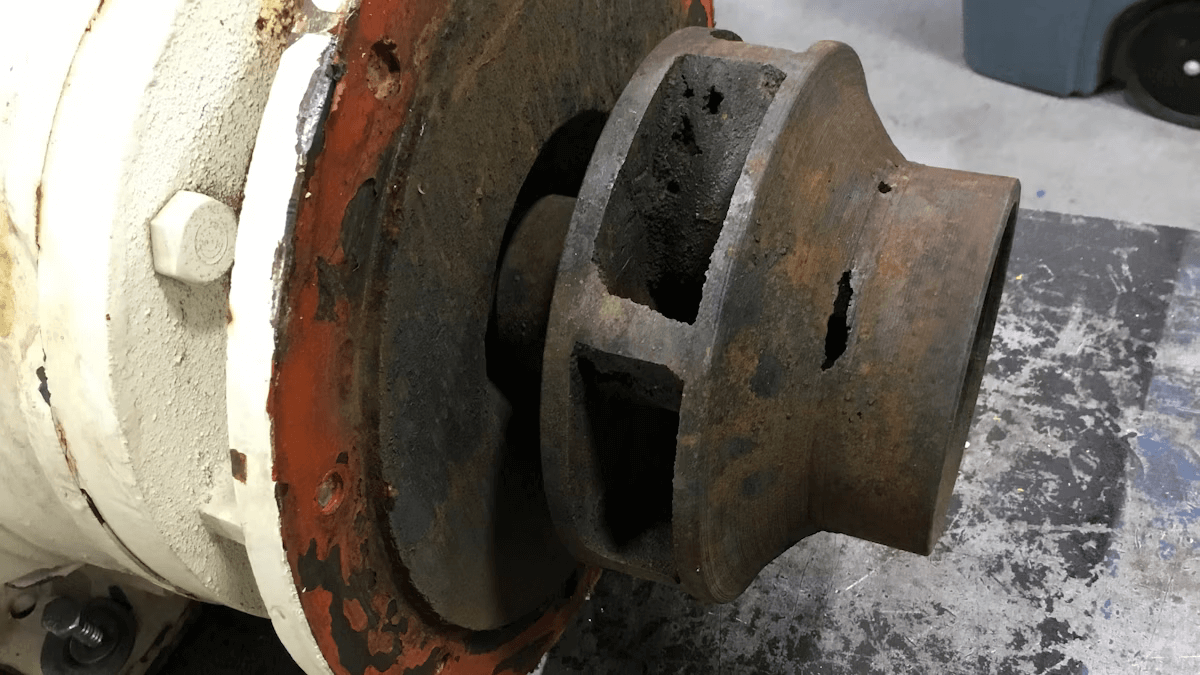
Recently, at CorroSafe, we were commissioned to investigate a failure of a Titanium Grade 2 centrifugal circulation pump that was in sodium sulfide (Na₂S) service. The client asked for not only the RCA of the failure but also recommendations for better material choice and operational practices to guarantee long-term reliability.
CorroSafe’s Approach
We conducted a formal RCA, following API RP 585, to evaluate the failure in a systematic manner. Our study proceeded with three prime steps:
Design Review – We compared the original design parameters and hydraulic sizing of the pump to actual process requirements with reference to API 610.
Operational Evaluation – CorroSafe correlated the pump’s planned operating envelope
with plant data. Fluctuations in flow control, temperature control, and operating procedures were recorded as per ISO 14224: Reliability and Maintenance Data Collection standards.
Material Compatibility Analysis – Titanium Grade 2’s performance was reviewed in
sodium sulfide media, based on corrosion data from NACE/AMPP MR0175/ISO 15156
(metallic materials’ sulfide stress cracking resistance) and ASTM G31.
What CorroSafe Discovered
- Improper Operating Practices – The throttle discharge valve was used to regulate flow instead of hydraulic control. It provided abnormal operating conditions, favouring cavitation.
- Poor Temperature Control – Unstable temperature control of the reactor created supersaturation of Na₂S. This initiated crystallization of the suction line, resulting in erosion, cavitation, and final pump failure.
- Localized Cooling – Cooling in the suction pipe promoted crystallization of Na₂S, contributing to the solids burden experienced by the pump.
- Material Degradation – Sulfide ion presence undermined the TiO₂ protective passive layer on itanium Grade 2. This resulted in corrosive rates that were far above what would be anticipated under typical alkaline design environments.
CorroSafe Recommendations
Material Upgrade – From comparative assessment, CorroSafe considered several potential materials such as SS 310, Monel 400, Nickel 200/201, Duplex 2205, and Hastelloy C-276. Upon corrosion performance data application and service condition mapping, Hastelloy C-276 was deemed the most suitable option for long-term service.
Better Temperature Control – We suggested more stringent temperature control of the reactor to keep sodium sulfide solubility in safe operating conditions. This follows API RP 14E, which gives preference to erosion/corrosion control in multiphase service.
Flow Control Strategy – Rather than throttling discharge valves, CorroSafe proposed either the installation of a Variable Frequency Drive (VFD) for close control, or the use of a smaller impeller to match the duty point required.
Both strategies minimize cavitation risk and are in conformity with API 610 guidelines for effective pump use.
Monitoring over the Long Term – CorroSafe recommended instituting recurring corrosion monitoring and inspection programs in accordance with API 571: Damage Mechanisms Affecting Fixed Equipment and API 580: Risk-Based Inspection to monitor degradation trends actively.
The Takeaway
This case illustrates an important lesson: material choice and process discipline must walk together. Even with high-performance alloys such as Titanium Grade 2, failure may result if process variations and corrosive species interact in unforeseen fashion.
By integrating failure analysis, international standards, and hands-on operational experience, CorroSafe provided a practical plan to restore reliability. Implementation of Hastelloy C-276, improved temperature control, and flow optimization solutions will enable the client to operate more safely and sustainably.