
Material Selection for an Anhydrous Aluminium Chloride Reactor
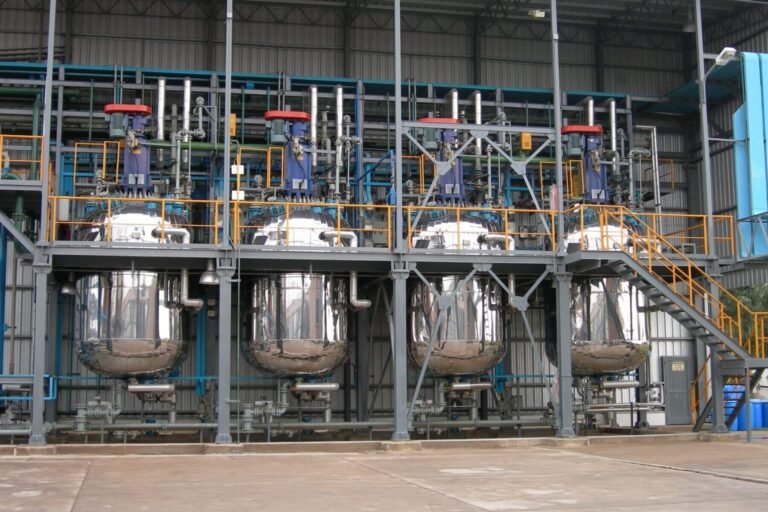
A leading chemical manufacturer in India specializing in organic catalyst-driven reactions. The facility operates complex batch processes requiring high-pressure containment and extreme temperature management.
The Challenge
The client required an expert evaluation for selecting the Materials of Construction (MOC) for a batch reactor and agitator system. The process involves highly aggressive conditions:
- Reaction Phase: Anhydrous Aluminium Chloride (AlCl3) catalyst in an organic medium at 130°C and 30 bar pressure.
- Corrosive Byproducts: Trace moisture (1000 ppm) in the organic feed reacts with the catalyst to generate dry Hydrogen Chloride (HCl) gas in-situ during the 5 to 10-hour reaction.
- Thermal Cycling: The system undergoes severe daily cycling from 130°C down to -15°C using -35°C brine in an internal helical coil.
- Aggressive Cleaning: A water wash step creates a highly acidic aqueous AlCl3 solution with a pH of ~0.5 and high chloride concentration.
Previous materials had reportedly failed, necessitating a robust, long-term solution compatible with these specific impurities and thermal stresses.
CorroSafe’s Approach
CorroSafe Consultant Pvt Ltd performed a multi-stage technical analysis to identify a material capable of surviving the dual-phase corrosive environment.
- Chemical Stoichiometry: Calculated that approximately 3.04 kg of HCl gas is generated per batch based on moisture levels in the 1500 kg organic feed.
- Environmental Duality Analysis: Evaluated materials against both the high-temperature anhydrous phase and the room-temperature acidic wash phase.
- Impurity Impact Study: Specifically analysed the effects of 500 ppm Iron (Fe) and 50 ppm heavy metal impurities present in the catalyst feed.
- Mechanical & Thermal Stress Modelling: Assessed the impact of high pressure (30 bar) and the severe thermal shock risk posed by the internal brine cooling coil.
- Comparative Matrix: Benchmarked Nickel-based alloys, Reactive metals, Glass-Lined Steel (GLS), and Fluoropolymer linings.
Key Discoveries
- Inadequacy of Standard Materials: Carbon steel and stainless steels (304L/316L) were ruled out due to rapid attack by wet HCl or the pH 0.5 wash solution.
- Oxidizing Impurity Risks: While Zirconium and Hastelloy B-3 handle pure HCl well, they were disqualified because the Iron impurity creates ferric chloride (FeCl3) during the wash, leading to catastrophic pitting and cracking.
- Lining Vulnerabilities: Glass Lined Steel: High risk of thermal shock failure (ΔT ~ 75°C) during the internal coil cooling step. Additionally, standard GLS vessels are typically rated for only 6-10 bar, making a 30-bar requirement a specialized and costly non-standard design.
- PFA/PTFE: High risk of HCl gas permeation at 130°C and 30 bar, which leads to hidden substrate corrosion behind the liner. The 145°C daily temperature swing also risks bond failure due to differential thermal expansion.
Recommendations
CorroSafe proposed a tiered recommendation strategy focusing on metallurgically bonded cladding to balance structural integrity with cost-effectiveness:
- Primary Recommendation: Hybrid BCI Ni Alloy Cladding: Offers the most robust resistance to both high-temperature HCl and the acidic AlCl3 wash containing iron impurities.
- Secondary Recommendation: Hastelloy C-22 Cladding: Provides superior resistance to localized pitting and crevice corrosion specifically in the presence of halide contaminants.
- Third Recommendation: Hastelloy C-276 Cladding: A reliable and versatile option that manages both oxidizing and non-oxidizing acids effectively.
- Agitator Strategy: The agitator should be constructed from or cladded with the same material as the reactor to ensure consistent corrosion resistance and avoid galvanic issues.
Technical Takeaways
- In-Situ Generation: Even if charging is done under inert conditions, moisture already present in the organic feed will trigger HCl generation; the MOC must be selected for the chemistry inside the vessel, not just the raw inputs.
- Impurities Drive Selection: Minor contaminants (like 500 ppm Fe) can completely flip a material’s suitability, shifting the requirement from reducing-resistant alloys (Hastelloy B-grade) to oxidizing-resistant alloys (Hastelloy C-grade).
- Mechanical Context Matters: A material’s chemical resistance is irrelevant if it cannot handle the mechanical realities of the process, such as 30 bar pressure or severe thermal cycling.