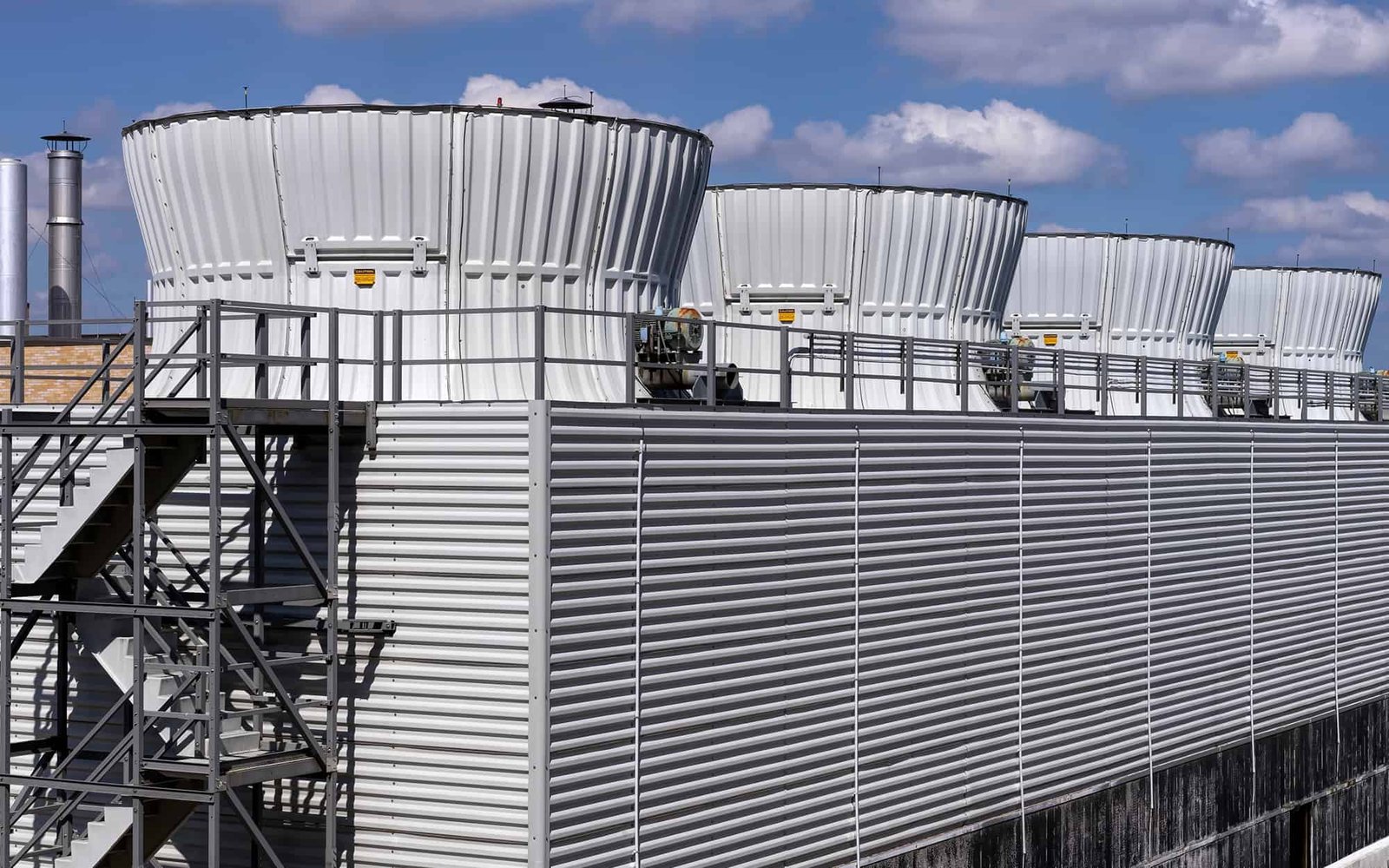
The Cost of Chemistry Neglect: Mitigating Premature Cooling Tower System Failure through Scientific Root Cause Analysis

Company Profile: A leading global player in the chemical and agribusiness sector, operating a large-scale edible oil processing facility.
1. Executive Summary
A world-class chemical and agribusiness manufacturing facility experienced a catastrophic and premature failure of its central cooling water piping network. Despite being commissioned only in Year 2024, the carbon steel infrastructure began failing within year of operation, characterized by widespread localized punctures in cooling water supply and return pipelines. A technical investigation identified Chloride-Induced Pitting Corrosion and Under-Deposit Corrosion (UDC) as the primary drivers, exacerbated by extreme operational deviations and an inadequate chemical treatment program.
2. Key Findings & Contributing Degradation Mechanisms
The investigation integrated operational logs, water chemistry data, dosing chemical consumption to reconstruct the failure mode. The root cause was identified as a “perfect storm” of chemical imbalances:
- Chloride-Induced Pitting: While industry best practices recommend keeping chlorides below 500 ppm for carbon steel, the facility’s levels peaked at 2,000 ppm. These high chloride levels penetrated the metal’s passive oxide layer, creating “autocatalytic” pits that “drilled” through the pipe walls.
- Aggressive Make up Water Profile: The makeup water (60% RO permeate) was highly acidic (pH 5.5) and lacked calcium/alkalinity. This aggressive water actively dissolved metal to reach chemical equilibrium, stripping away protective films.
- Inhibitor Starvation: Chemical dosing was critically low. Protective residuals were measured at ~2.3 ppm, significantly below the required to prevent oxidation.
- Microbiological Proliferation: Inconsistent biocide dosing allowed organic demand to consume available chlorine, creating an environment ripe for Bio-Induced Corrosion (MIC).
3. Recommended Solutions
To arrest the rapid degradation and extend the asset’s life, the study proposed a transition from manual oversight to automated, precision-based water management:
- Automated Dosing Infrastructure: Replace manual “bucket dosing” with a controlled system that adjusts chemical feeds based on real-time flow and water quality.
- Makeup Water Stabilization: Implement a remineralization process for the RO permeate to raise the Langelier Saturation Index (LSI), ensuring the water is neither aggressive nor scaling.
- System Passivation: Execute a specialized “Pre-Filming” program using phosphate and zinc to rapidly re-establish a protective oxide layer on the damaged metal surfaces.
4. Immediate Operational Fixes
To stabilize the system, the following immediate protocols were mandated:
- Aggressive Blowdown: Increase the blowdown rate to immediately flush the system and bring Chloride levels down to a safe threshold.
- Biocide Shock Treatment: Implement a high-dose “slug” of non-oxidizing biocide followed by continuous chlorine drip-feeds to eliminate existing biofilm.
- pH Correction: Immediate adjustment of the makeup water pH to a range of 7.0–7.5 to stop the “hungry water” from further stripping the pipes.
5. The Takeaway
This case study serves as a critical lesson in “Infant Mortality” of industrial assets. Even the most robust carbon steel infrastructure can be rendered unserviceable in less than a year if water chemistry is neglected. For heavy industry players, the cost of automated chemical monitoring and high-quality makeup water is a fraction of the cost of full-scale piping replacement and unplanned production downtime.
Proactive chemistry management is not just a maintenance task; it is an essential strategy for asset preservation.