Understanding How Wind Turbines Work
Wind turbines harness the wind’s kinetic energy and turn it into electricity. Here’s how they operate:
- Rotor Blades: These blades spin when the wind blows.
- Shaft Connection: The spinning blades turn a shaft connected to a generator.
- Electricity Generation: The generator converts this motion into electricity, which is then sent to the grid for homes and businesses.
Most wind turbines have a horizontal axis, meaning their blades rotate around a horizontal line. These turbines come in different sizes and setups. Despite being built tough to handle harsh weather, they can still suffer from corrosion.
Corrosion Challenges for Wind Turbines
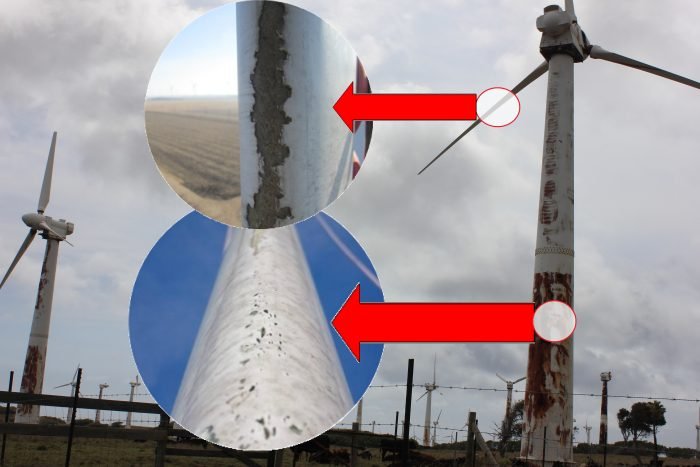
Wind turbines face constant exposure to the elements, leading to various forms of corrosion:
- Blade Corrosion: UV radiation can cause cracks and delamination on the blades.
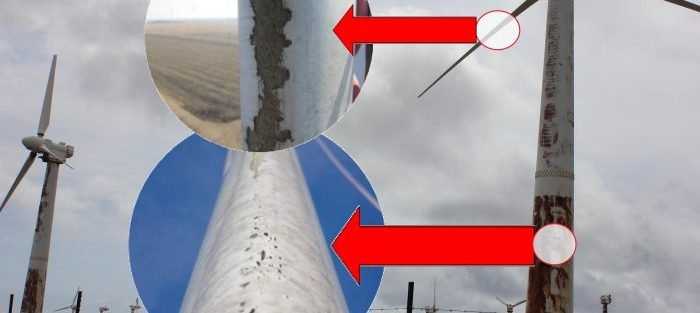
- Tower Corrosion: Saltwater exposure, especially near coasts, can corrode the tower and other parts.
- Galvanic Corrosion: This type occurs in hard-to-reach areas, making it particularly tough to prevent.
- Blade Erosion: The tips of the blades, which can reach speeds of 300 km/h, are prone to erosion from sunlight and other factors.
The Consequences of Corrosion
Corrosion can significantly impact wind turbines:
- Efficiency Loss: Reduced efficiency means less electricity is generated.
- Structural Damage: Corrosion can shorten the lifespan of turbines, leading to more frequent maintenance and repairs.
Preventing Corrosion in Wind Turbines
Passive Prevention Methods
- Coatings: Paint and galvanizing create a barrier to protect metal parts.
- Corrosion-Resistant Materials: Using stainless steel and aluminum can slow down the corrosion process.
However, coatings can wear off over time, especially in hard-to-reach areas.
Active Prevention Methods
- Cathodic Protection: This method uses electrical currents to prevent corrosion.
- Corrosion Inhibitors: Chemicals added to the environment to slow corrosion.
- Monitoring Systems: Detect and track corrosion progression to enable timely interventions.
Future Developments in Corrosion Prevention
Innovations in corrosion prevention are promising:
- Advanced Materials: Nanocomposites with superior corrosion resistance.
- Monitoring Technologies: Ultrasonic and infrared imaging for early corrosion detection.
By investing in research and development, we can enhance the sustainability and resilience of wind turbines.
In Summary
Wind turbines are essential in our shift towards sustainable energy, helping reduce reliance on fossil fuels and combat climate change. However, corrosion remains a significant challenge, affecting their lifespan and efficiency. Effective prevention and mitigation strategies are vital to maintaining their performance and durability.